
How Do I Grow a Pediatric Therapy Clinic?
To grow a pediatric therapy clinic, you need parents to find you when they start searching, see enough on your website to trust you with their child, and hear back from you before they call the next clinic on the list, and you need the therapist hours to see the kids they bring. Every growth tactic serves one of those needs, from showing up on Google and AI assistants to fast follow-up, pediatrician referrals and a space families talk about.
This article covers:
- Where parents look for a clinic and how to show up there
- What your website has to do for a parent
- When paid ads make sense for a pediatric clinic
- What should happen between a parent's first inquiry and the evaluation
- How pediatrician referrals and word of mouth build
- How your space and new programs add growth
Where do parents find a pediatric therapy clinic?
Most families reach you through a chain that starts with a concern. A pediatrician mentions a speech delay at a well visit, or a preschool teacher notices a child who avoids the playground. Then they search, typing "pediatric OT near me" or "speech therapy for toddlers" into Google, scanning the map results and reading reviews, and some of them now ask ChatGPT or read Google's AI Overview to decide which clinic to call.
The map comes first for a local clinic because that is where nearby parents compare options side by side. A complete Google Business Profile with the right categories, real photos of your therapists and gym, and accurate hours is the foundation, and our guide to getting your clinic to show up on Google Maps walks through it. Reviews do much of the persuading there, so build a steady habit of asking, using the approach in how to get more Google reviews for your clinic.
AI assistants are the newer layer. When a parent asks for the best pediatric speech clinic in their town, the assistant draws on websites, directories and reviews it can read, and clinics with clear service pages and consistent business details are easier for it to cite. We cover what helps in how to get your clinic recommended by ChatGPT. Driftlss handles this through its SEO and AI search visibility service for pediatric clinics, tracking which assistants mention a clinic month over month, and its breakdown of where pediatric clinics get their clients is a good map of the channels.
What should my website do for a parent?
Your website has one job for a parent: help them decide your clinic is right for their child and make the next step obvious. Parents who arrive from the map or an AI answer want to see the real therapists who would work with their kid and photos of the actual space. They also want a plain-language explanation of each service, because many of them are still learning what occupational therapy or sensory integration means, along with straight answers on insurance, evaluations and the waitlist before they pick up the phone.
We cover the full checklist in what a pediatric therapy clinic website should include. Online booking for clinics can work for consultations or tours even when evaluations need a phone call first, and a website chatbot can answer the after-bedtime questions that would otherwise wait until morning. Driftlss builds pediatric clinic websites from scratch around each clinic's own team and space, fast on phones, with one clear way to reach the clinic on every page.
Should I pay for ads to fill my schedule?
Ads make sense when a specific service has open slots and you need families for them soon. A Meta or Google campaign aimed at parents in your service area sends inquiries for as long as it runs, which suits a gap you need filled now. The common mistake is advertising a service that already has a long waitlist, which grows the list and frustrates parents who then wait for months. Point campaigns at the openings you have, such as after-school OT times or a new feeding therapist's caseload, and pause them when the schedule fills.
Check capacity before you spend. If every therapist is booked, your growth constraint is hiring, and ads will only add names to a waitlist you already struggle to manage. We get into platforms, targeting and expectations in whether Facebook and Google ads work for pediatric therapy clinics. Driftlss runs paid ads for pediatric practices built around the services with openings, with instant-form leads landing in the clinic's CRM along with the family's city and state.
What happens after a parent reaches out?
This is where many pediatric clinics lose families they already worked to attract. A parent fills out a form on Tuesday night, someone calls back Thursday, and by then the parent has booked an evaluation somewhere else or stopped answering unknown numbers. Every inquiry needs an owner and a next step, and the path from first contact to evaluation should be written down: the callback, insurance verification, intake paperwork, the authorization if the payer requires one, and the scheduled evaluation. We break down where that path stalls in why parent inquiries don't turn into evaluations.
Timing is the other half. Parents research after the kids are asleep, which is exactly when your front desk is closed, so decide on purpose what happens to a call or message at 9 p.m. The options and tradeoffs are in what should happen when a parent calls after hours. Driftlss builds a custom CRM for pediatric clinics where every inquiry from forms and ad campaigns lands on one board with an owner and a next step, and partial form answers are saved so staff can reach a parent who got interrupted. Its AI intake assistant answers common questions by chat and phone at night, captures the family's details and hands the conversation to staff with the context written down.
How do I earn referrals and word of mouth?
Pediatricians, school teams and early intervention coordinators send many families to therapy, and those relationships grow when you make referring easy and close the loop. Give offices a simple way to send a referral, confirm when you have reached the family, and send a short note once the evaluation is done so the physician knows what happened. Driftlss has a practical guide to building pediatrician referrals for a therapy practice.
Parents are the other referral channel. They talk at school pickup, in local parent groups and in waiting rooms, and they recommend the clinic their kid was excited to visit. Social media gives them something to share, whether that is a short video of the gym, an introduction to a therapist or an answer to a question parents ask at intake. Our guide to what a pediatric therapy clinic should post on social media covers what works, and Driftlss plans and schedules social content for pediatric practices that shows families the space and team before their first visit.
Can my space and programs help the clinic grow?
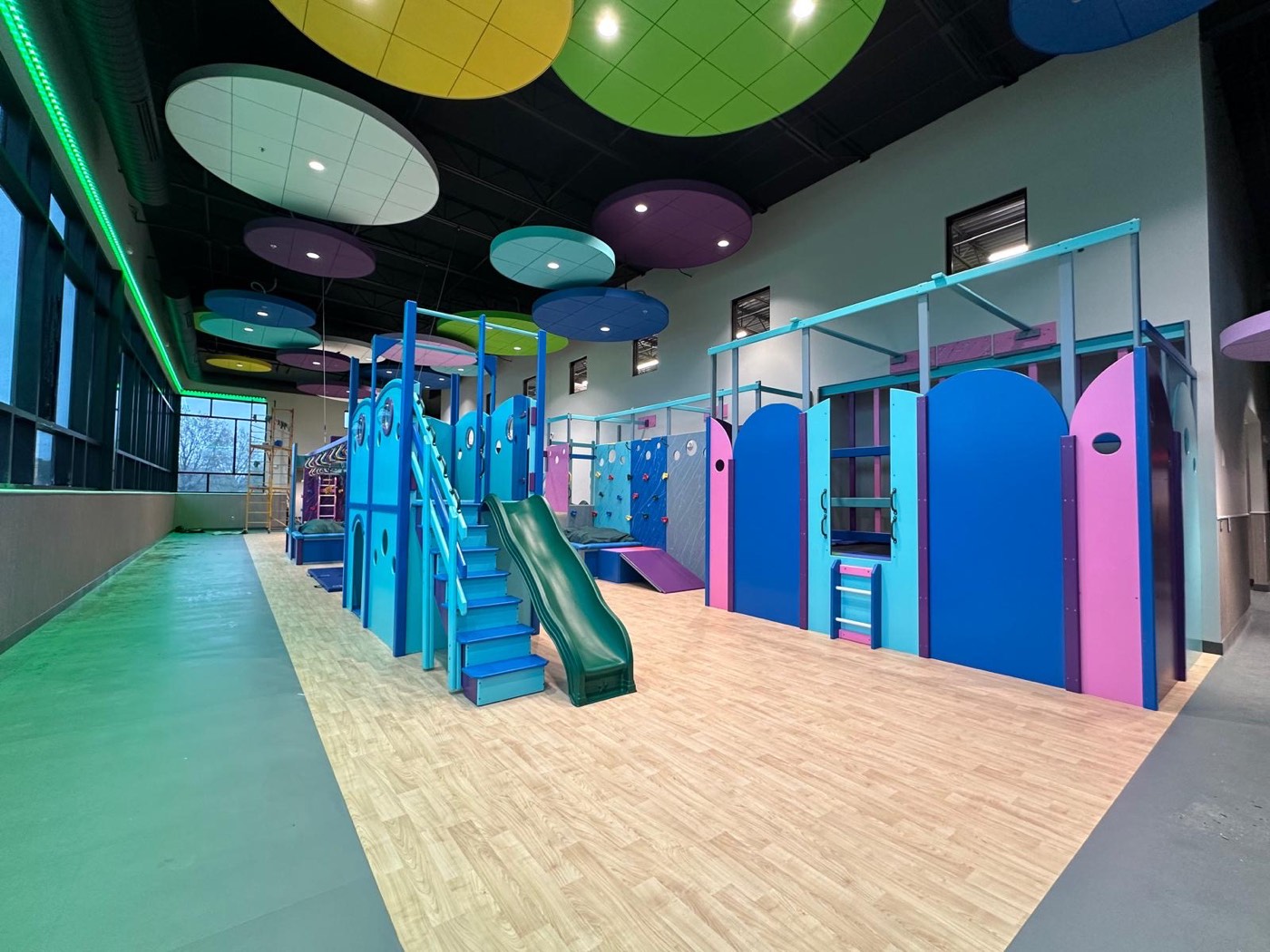
The room a child walks into shapes how they feel about therapy, and parents notice. A well designed sensory gym gives therapists more ways to provide vestibular and proprioceptive input, and a child who looks forward to sessions gives parents something to describe to friends. We work through the payback question in whether a sensory gym is worth it for a pediatric therapy clinic. Fun Factory Sensory Gym, which describes itself as the inventor of the custom indoor sensory gym, designs and installs commercial sensory gyms for therapy clinics, and its sensory gym ROI calculator lets you model payback for your own clinic.
A good space can also support programs that insurance does not pay for. Fun Factory notes that larger facilities it has built host birthday parties, open play and enrichment programs, which bring new families through the door who may later need therapy themselves. We cover the options and the guardrails in how a pediatric clinic can earn revenue beyond insurance.
The short version
Growing a pediatric therapy clinic comes down to being found where parents search, giving them a website that answers their questions, responding to every inquiry quickly and earning referrals from pediatricians and other parents. Use ads for services with openings, check therapist capacity before you market, and invest in a space families talk about. Fix the leaks in follow-up first, since those families already chose to reach out.
Frequently asked questions
What should I fix first to grow my pediatric therapy clinic?
Start with follow-up and your Google Business Profile. Inquiries that never get a timely callback are families you already earned, and an incomplete profile hides you from nearby parents who are searching right now. Both cost little to fix and pay off before any new marketing spend.
How long does it take to grow a pediatric therapy clinic?
Faster follow-up and well targeted ads can change your schedule quickly. Search rankings, AI citations and pediatrician referrals build over months and keep compounding, so start them early even if ads carry the first stretch.
Should I hire an agency or market my clinic in-house?
Most clinic owners do not have the hours to run SEO, ads, a CRM and content alongside a caseload. Referral visits and social posts benefit from your own voice, so keep those close. For the technical pieces, hire a team that works with pediatric practices and reports on inquiries and booked evaluations.
Should I keep marketing if I already have a waitlist?
Yes, with a different aim. Promote the services and time slots that have openings, keep waiting families updated with a clear waitlist management process, and keep building search visibility and referrals so new therapists fill up as soon as you hire them.
Have one team run your growth system
Everything in this article works better connected, because the ad that fills an open slot feeds the CRM, the CRM makes sure the parent hears back, and the website and AI visibility bring in the next family. Driftlss, the team behind this site, builds and runs that whole marketing and intake system for pediatric therapy clinics, from the website and SEO through ads, the CRM and the AI intake assistant. Fun Factory Sensory Gym is a Driftlss client, and its website, lead ads, CRM and site chat assistant were all built by Driftlss. If you want one team accountable for turning parent searches into booked evaluations, talk to Driftlss about growing your pediatric clinic.
For the physical space, Fun Factory Sensory Gym designs and installs custom sensory gyms for therapy clinics, and its PLOT program offers qualifying first-time customers 0% financing over 6 to 12 months.